Sound familiar?Longmoor
- The call
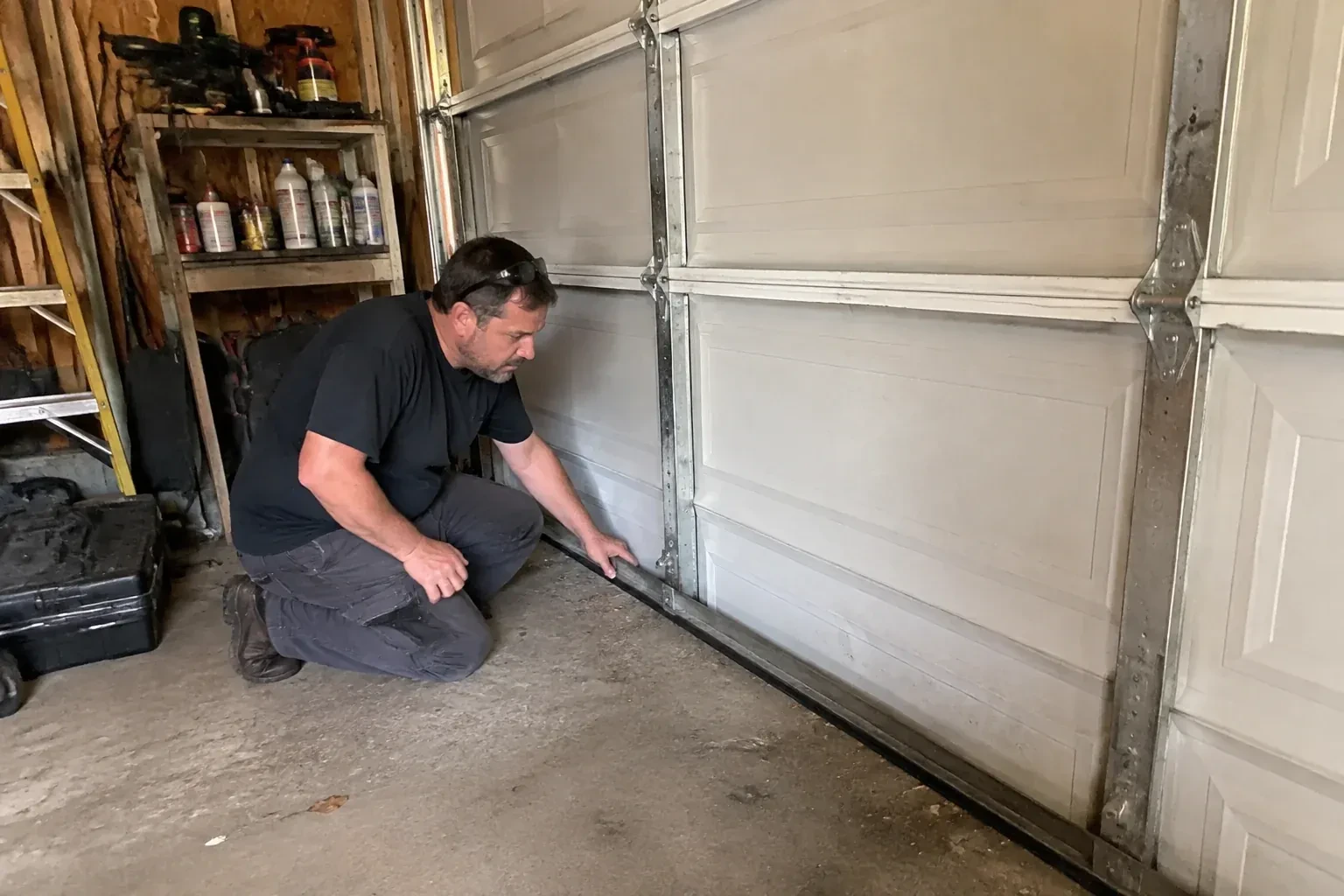
- Open the door by hand and it drifts back down on its own, a little at first and then all at once. Nothing is broken that you can see, but the springs along the tracks look tired, rusty and slightly sagging.
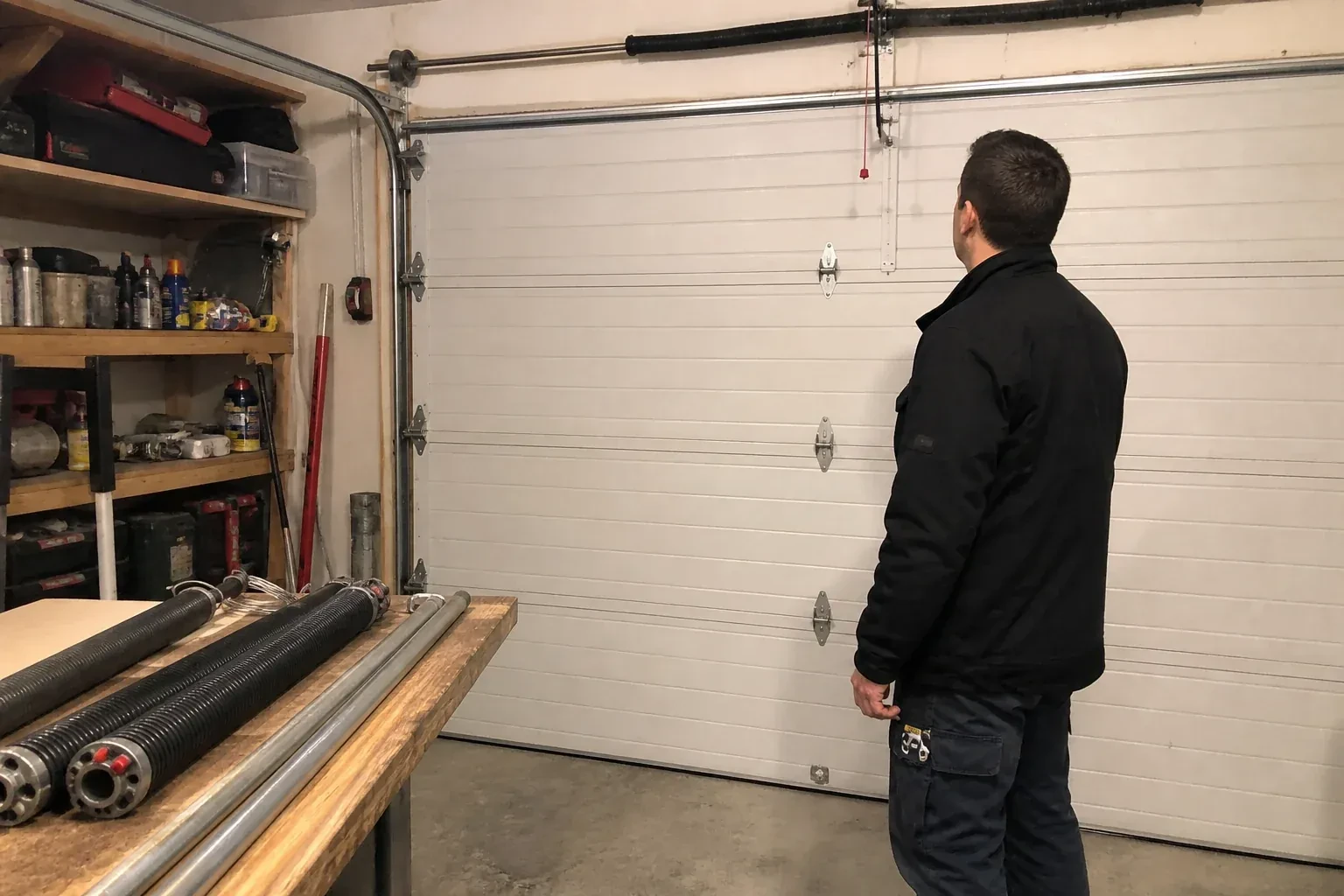
Open the door by hand and it drifts back down on its own, a little at first and then all at once. Nothing is broken that you can see, but the springs along the tracks look tired, rusty and slightly sagging.
Every extension spring should carry a containment cable, and replacement is the moment to make sure yours do. A containment cable runs through the centre of the spring and is anchored at both ends, to the rear hanger and to the bracket at the front of the track. It does no lifting; its purpose is to hold a spring that breaks so the pieces stay on the cable. Many older doors predate this practice, which a home inspection checklist checks for. When springs are replaced, new containment cables are fitted with them, which keeps a broken spring's pieces contained, not the door's weight, balance or safety.
Sound familiar?Longmoor
Extension Spring Replacement · Longmoor
Scene 1
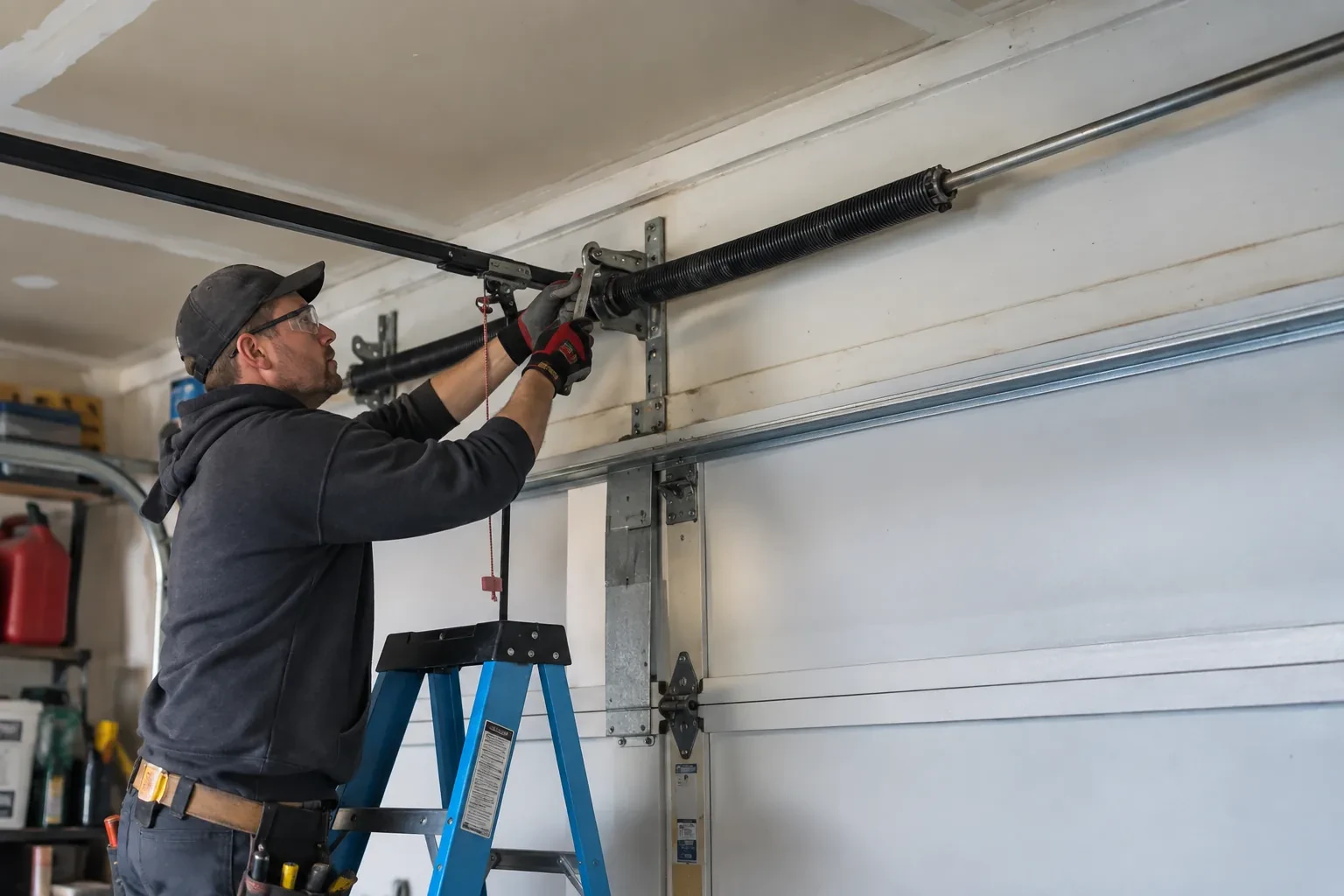
An extension spring is stretched tight when the door is closed and nearly relaxed when the door is fully open, so the first move is to get the door up. The technician pulls the opener's release, raises the door by hand if it will go, and clamps both vertical tracks below the bottom rollers so the door cannot come down. If a broken spring has left the door stuck partway, it is lifted and supported with the weight taken on clamps and props before anything else is handled. With the door held open, the springs, pulleys and hooks can be examined and removed like ordinary hardware, which is the whole reason the sequence begins this way.
Scene 2
Each lift cable starts at the bottom bracket, where its loop goes over the pin or is secured with a clevis pin. From there it runs up the vertical track, over the fixed pulley at the front of the horizontal track, back along the track to the pulley on the end of the spring, around it, and forward again to the S-hook or adjusting clip at the front hanger. The technician keeps the cable seated in each pulley groove and makes sure it passes on the correct side of the containment cable and the track. Cables are renewed if the old ones showed any fraying or rust, and always as a pair of the same length.
Scene 3
Before leaving, the technician tells you what the door weighed, which spring rating and length went on, whether the pulleys and cables were renewed, and which hook position the cables were set to. Write it on a card by the opener or inside the door's manual. Extension springs are sold by rating and length, so the next set can be ordered from that card without weighing the door again, and a technician arriving later can see at a glance whether the door has been altered since. Add the date and roughly how many times a day the door is used; together those two facts give a fair idea of when the springs will be due again.
What shapes the quoteDynes Garage Door Experts
FeesSame any hour
Yes. The last steps of the visit are the balance test by hand, several full cycles under power and the opener's reversal checks, so the door is ready for normal use when the technician leaves. New springs need no settling period. It is worth running it yourself once or twice while the technician is still there, so you know what a properly balanced door sounds and feels like from now on.
Yes, and it is one of the more common reasons a pair of springs is suddenly found wanting. Insulation panels, glazed sections, a wood overlay or a new steel skin all add weight the original springs were never chosen for, so the door grows heavy and the opener strains. When the springs are replaced, the door is weighed as it is now, and the new pair is rated for the door you actually have.
The two springs are the same age and have stretched the same number of times, so the one still hanging is close behind. There is also a balance reason: a door lifts level only when both sides pull equally, and a new spring beside a worn one lifts its corner first and twists the door. Fitting a matched pair sets both sides the same and avoids a second visit a few months on.
HaltonOntario
Extension Spring Replacement · Burlington, Dynes, Elizabeth Gardens, Orchard, Port Nelson, Roseland, Strathcona Gardens
Every square is one home in a hundred.
On-site assessment
Open the door by hand and it drifts back down on its own, a little at first and then all at once.
(289) 816-2884, open 24/7.
On-site assessment preferred · (289) 816-2884, open 24/7