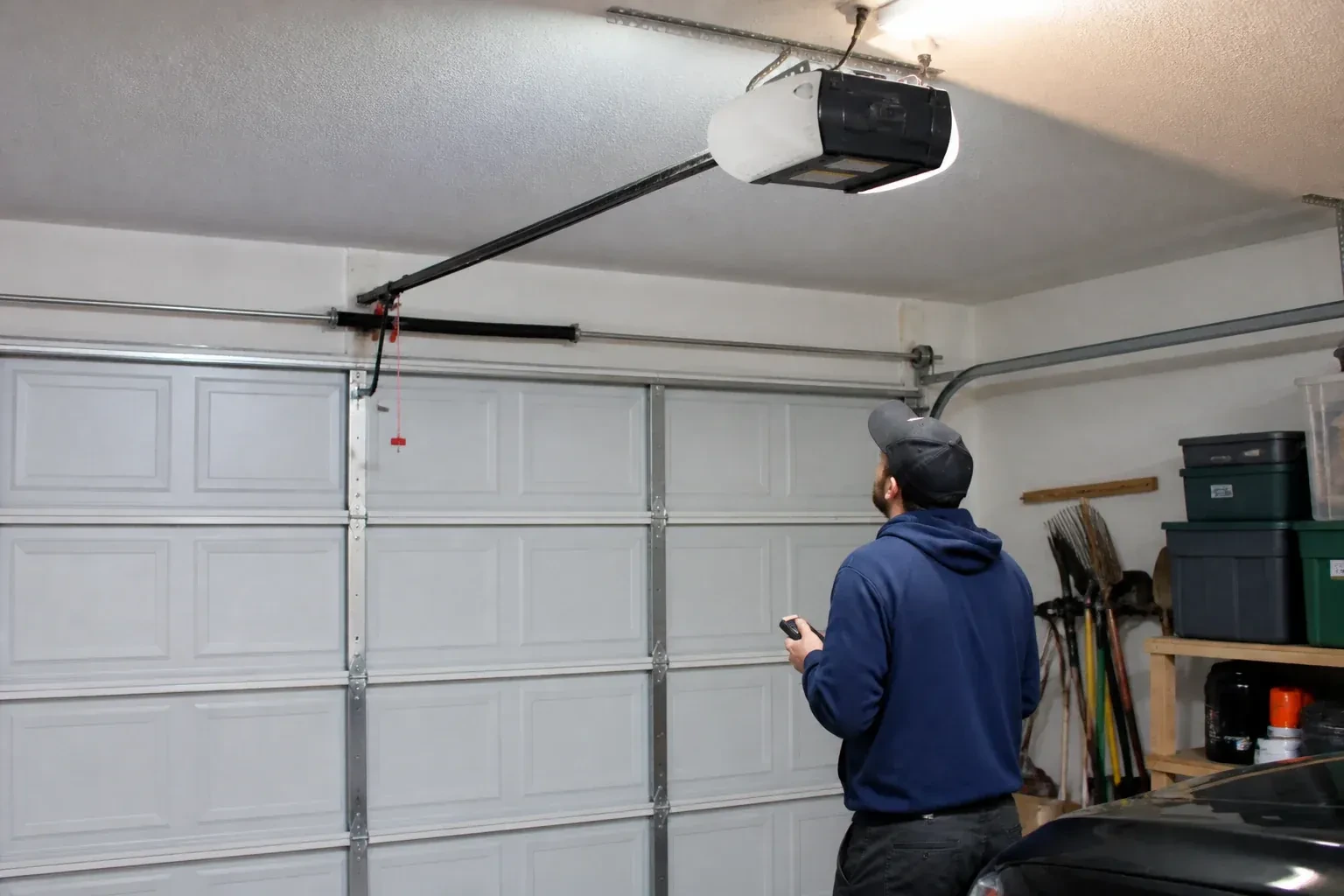
Sound familiar?Longmoor
- The call
- Someone tightened the belt last month to stop the sag. Now the opener sounds like a chain drive, the motor labours on the way up, and the whole rail vibrates under the ceiling.
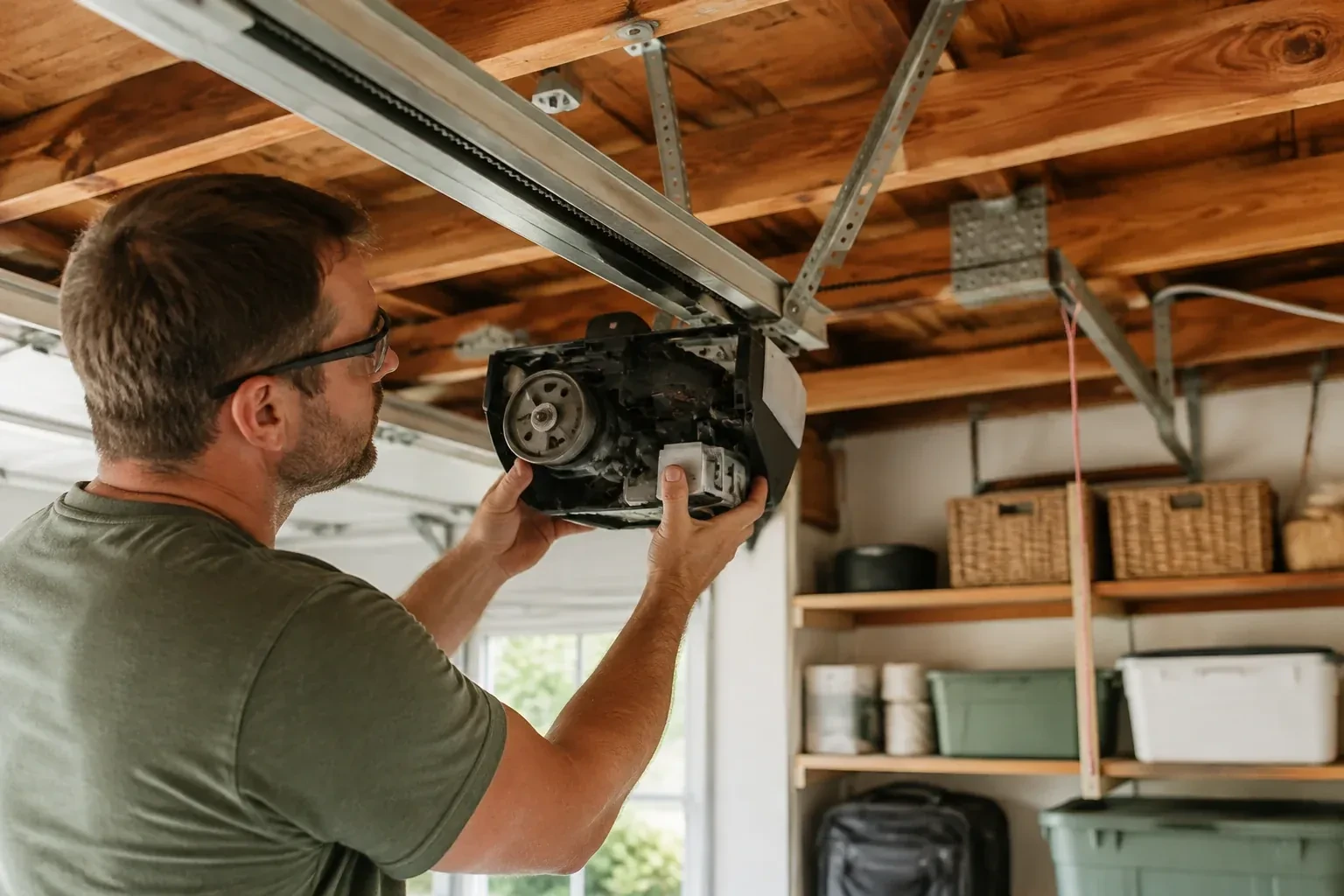
After the power came back you pulled the red cord to get the car out. Since reconnecting, the door stops short of the floor, and no amount of turning the limit adjustment brings it the rest of the way down.
The visit runs in a set order. First the operator is unplugged and the door is released and lifted by hand, because the belt only guides a door the springs already carry; a heavy door is a spring job, not a belt job. Next the belt is examined along both runs, its tension checked at the trolley spring, and the sprocket, idler pulley, trolley and rail looked over. Then the repair itself: adjusting, or replacing the belt, trolley, pulley or gear kit. Finally the motor and trolley are put back in phase, travel and force are relearned, and the two reversal tests are run before the door is handed back.
Sound familiar?Longmoor
Belt-Drive Opener Repair · Longmoor
Scene 1
The trolley turns the belt's pull into movement of the door and takes every start and stop. The technician checks its two halves: the inner half the belt is fixed to, and the outer half the door arm hangs from. The release lever should part them cleanly when the cord is pulled and lock them together again when the operator runs or the cord is pulled a second time. Cracks in the housing, a lever gummed with old grease, play on the rail, or a trolley sitting hard against a stop bolt are all noted. Whether trolley and motor are in step is checked too, since a belt that has been off the sprocket often leaves them disagreeing.
Scene 2
With the drive rebuilt and the door reconnected, the operator is taught its door again. Newer units run a learn cycle that records the full travel and the effort the door needs; older ones have limit screws and force dials set by hand. The close limit is set so the bottom seal meets the floor without the belt straining, and the open limit so the top section stops short of the header. Then the tests: a 2x4 laid flat under the door must send it back up on contact, and an object passed through the photo-eye beam must reverse it while closing. Any hesitation is adjusted and the tests are run again.
Scene 3
You leave knowing what a healthy belt looks like from the garage floor. It runs level, just above or inside the rail, with no visible sag between the motor head and the header. Its teeth are even along the whole length and its edges are square, not fuzzy. Every few months, with the door closed, glance up and along the rail; then open the door and look again, since sag shows on the return run. If the belt begins to hang below the rail, slap on the way up or click at the same point each cycle, that is the moment to call, while it is a tension adjustment rather than a stalled door.
What shapes the quoteDynes Garage Door Experts
FeesSame any hour
It can, if the door was open or out of balance when it was released. The release itself disconnects the trolley from the belt, so a falling door does not throw its weight onto the drive; the real risk is the door itself crashing down and damaging the tracks, hinges or panels. Nothing about the cord itself is harmful; it is designed to be used. The habit to keep is to release the door only when it is closed.
It is the wheel at the header end of the rail that the belt wraps around on its return. It spins on a small bearing, and when that bearing dries or fails the pulley squeals on every cycle and can let the belt wander to one side and fray. Replacing the pulley is a modest job done with the belt slack, followed by re-tensioning.
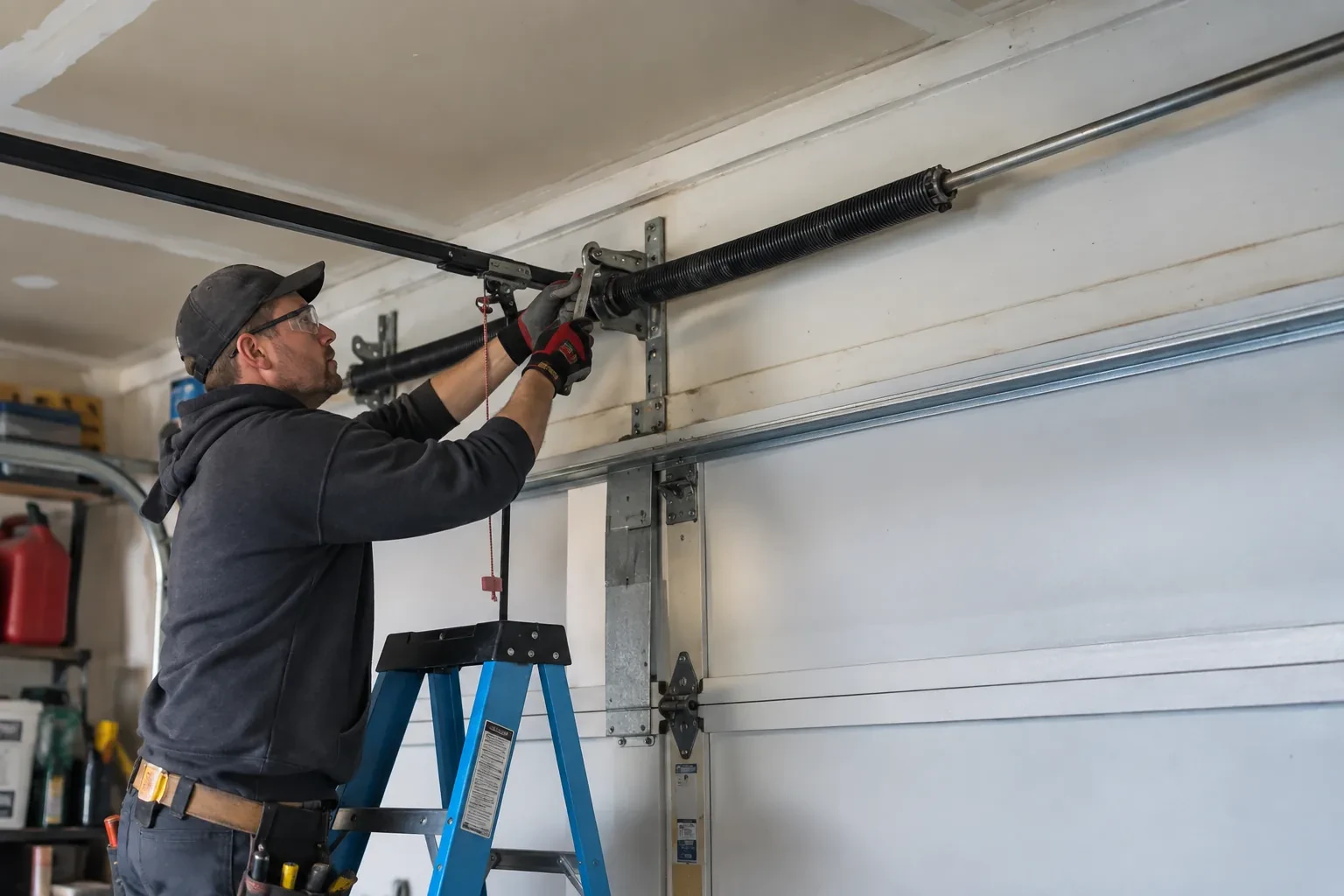
Because the belt guides the door; the springs carry it. A door that lifts with moderate effort and stays put a metre off the floor is balanced, and a belt on that door lasts. A door that drops or drifts is loading the belt, trolley and sprocket far beyond their design, so a new belt would wear the same way. Spring work comes first in that case.
HaltonOntario
Belt-Drive Opener Repair · Burlington, Dynes, Elizabeth Gardens, Orchard, Port Nelson, Roseland, Strathcona Gardens
Every square is one home in a hundred.
On-site assessment
After the power came back you pulled the red cord to get the car out.
(289) 816-2884, open 24/7.
On-site assessment preferred · (289) 816-2884, open 24/7