Sound familiar?Burlington
- The call
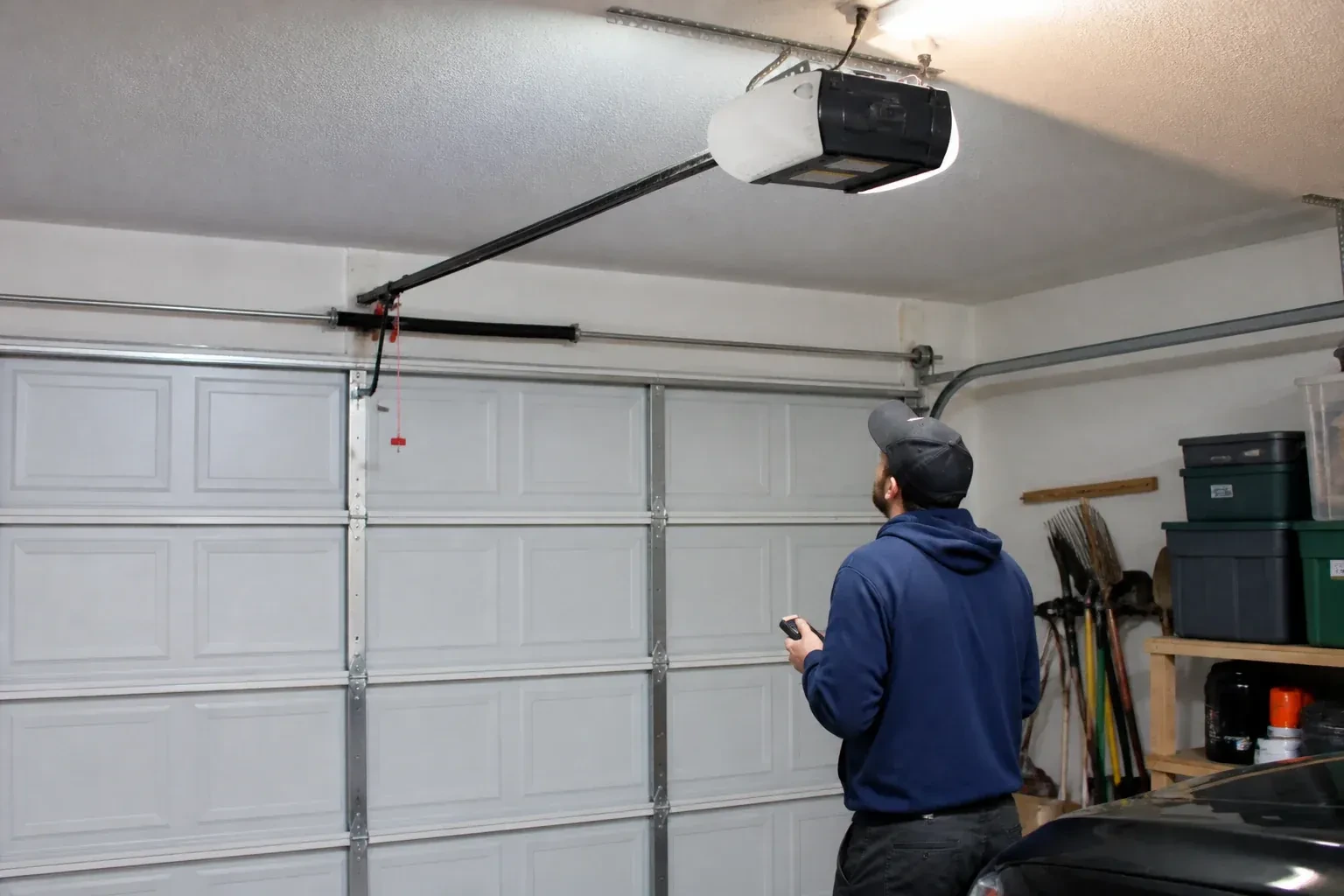
- The chain in the detached garage went orange with rust over the winter, the links are stiff, and the opener strains and groans to pull the door up. By afternoon, once the garage warms, it behaves almost normally.
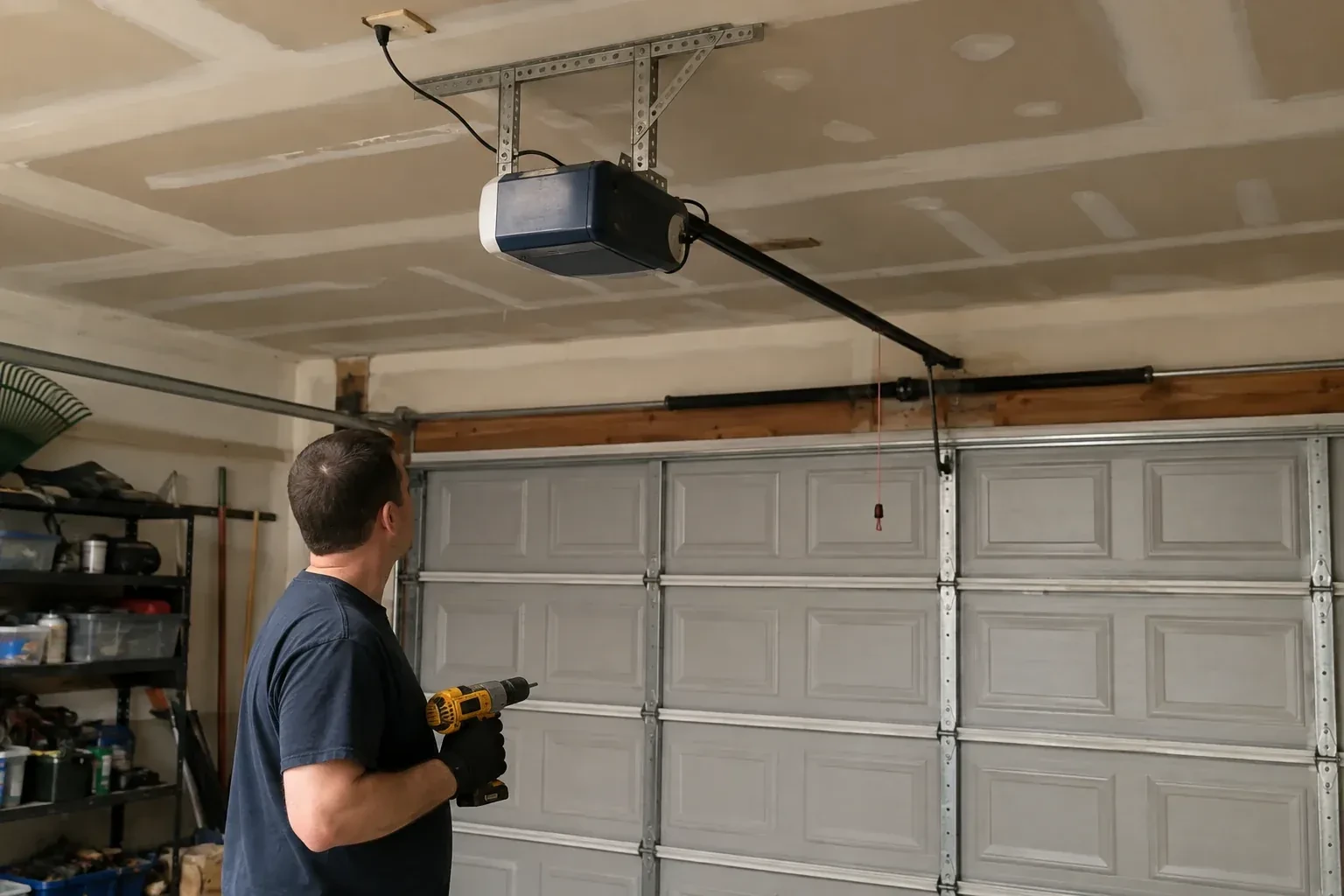
The rail shakes when the door runs. The steel straps holding it to the ceiling have worked loose, the chain rattles the length of the garage, and a bolt has already dropped onto the hood of the car.
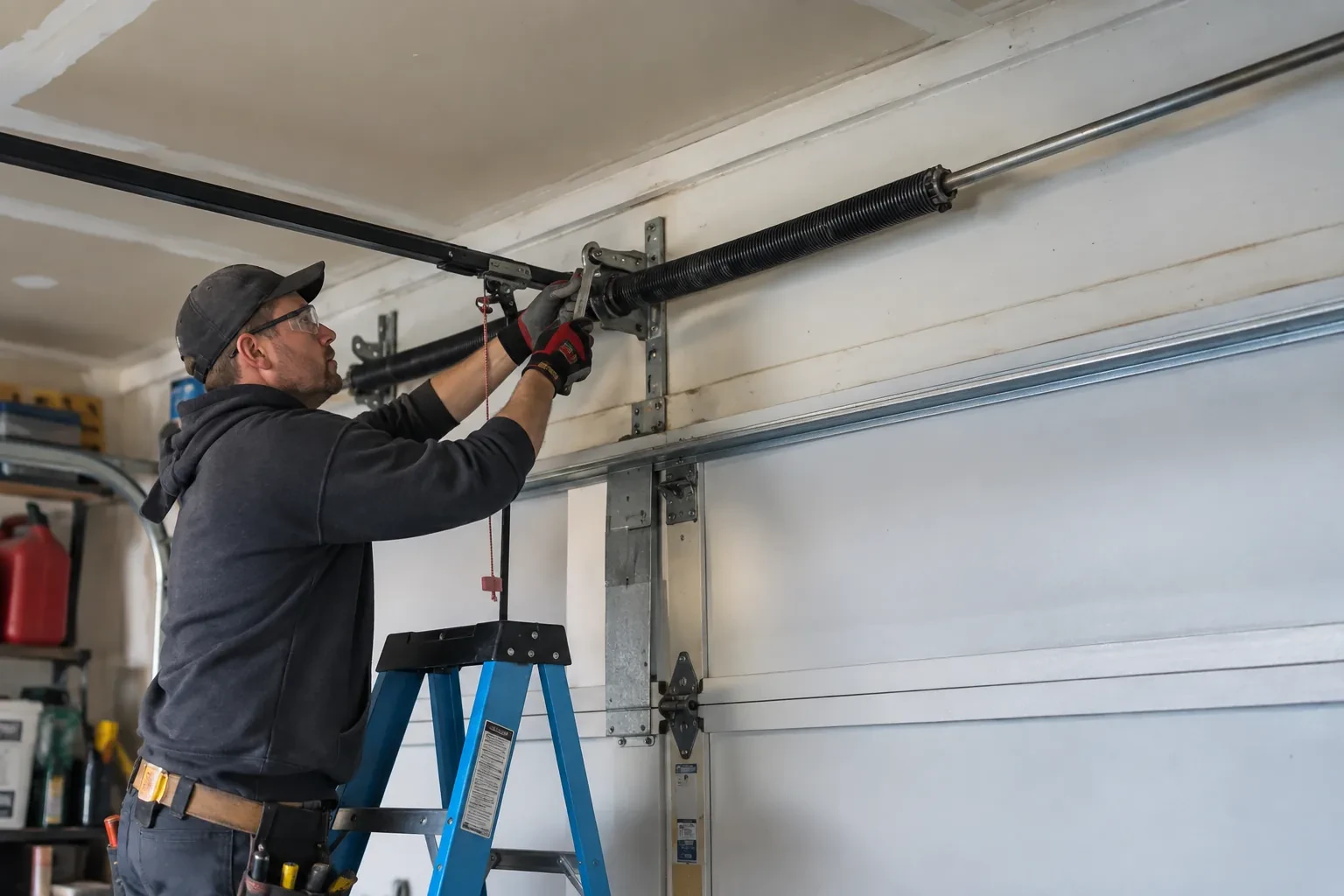
Chain tension is set by measurement, not by feel. With the door closed and disconnected from the trolley, a correctly tensioned chain sits at the height the opener's own manual specifies for its rail shape, measured at the middle of the rail, since the figure differs between makes and rail types. Two nuts on the trolley do the work: the outer one raises or lowers the chain and the inner one locks the setting. A chain that hangs lower slaps and skips; one pulled tighter than that wears the sprocket and loads the motor bearings. The technician checks the manual, sets the chain, locks it and runs the safety tests.
Sound familiar?Burlington
Chain-Drive Opener Repair · Burlington
Scene 1
A chain tells its age. The technician runs it through their fingers with the door disconnected, feeling for stiff or seized links, surface rust that has crept into the rollers, and a master link that has spread. Stretch shows as sag: with the door closed, the chain is measured at the middle of the rail against the maker's figure for that make and rail shape, since the correct height is not the same across models. A chain that sits well below that figure after years of use has lengthened and may need replacing rather than tensioning, because taking up too much slack at the trolley leaves the run over the sprocket uneven.
Scene 2
A trolley lodged against the stop bolt is released rather than forced. The door is disconnected at the red handle, the outer tensioner nut is backed off several turns to slacken the chain, and the operator is run so the trolley travels away from the stop under its own drive. The limit is then pulled back so the trolley stops short of the bolt in future. Where the inner or outer trolley shows wear, a cracked latch or a bent release lever, the worn piece is replaced with the model's part and the release is checked to pick the door arm up on the first pass. The chain is re-tensioned to specification afterwards.
Scene 3
In a detached or unheated garage the drive has been set up for winter: force adjusted so the door moves at low temperature without the operator being oversensitive, the rail greased, and the door hardware lubricated before frost. Two habits help. Keep the threshold clear of snow and slush so the bottom seal does not freeze to the slab, and if the door reverses on a bitter morning, free the seal rather than pressing the button repeatedly; the operator is doing what it should. Expect the chain to sound a touch different at minus twenty, and let the garage warm before deciding something is wrong.
What shapes the quoteDynes Garage Door Experts
FeesSame any hour
Those are shavings from the plastic drive gear inside the head. The gear meshes with a steel worm on the motor shaft, and when it wears the teeth flake off and collect under the cover. Once you see shavings the gear is close to stripping, after which the motor runs and the door stays still. Replacing the gear and sprocket assembly before that happens turns a stranded morning into a planned repair.
A tension and limit adjustment with the reversal tests is generally a short visit. Replacing a gear and sprocket assembly or fitting a new chain, phasing it, tensioning and re-setting the limits takes longer, usually a good part of a morning or afternoon. If the balance check shows spring or roller work is needed first, or a part for an older model has to be ordered, the technician will say so and plan a second visit.
With the door closed, pull the red handle and try lifting the door by hand; note whether it is heavy or stays up on its own. Look at the chain for slack, rust or a broken link, and at the head for pale shavings. Note whether the motor runs at all, whether the door stops short or reverses, and where the trolley sits on the rail. The model on the head's label and a photo of the rail help too.
HaltonOntario
Chain-Drive Opener Repair · Dynes, Elizabeth Gardens, Longmoor, Orchard, Port Nelson, Roseland, Strathcona Gardens
Every square is one home in a hundred.
On-site assessment preferred · (289) 816-2884, open 24/7