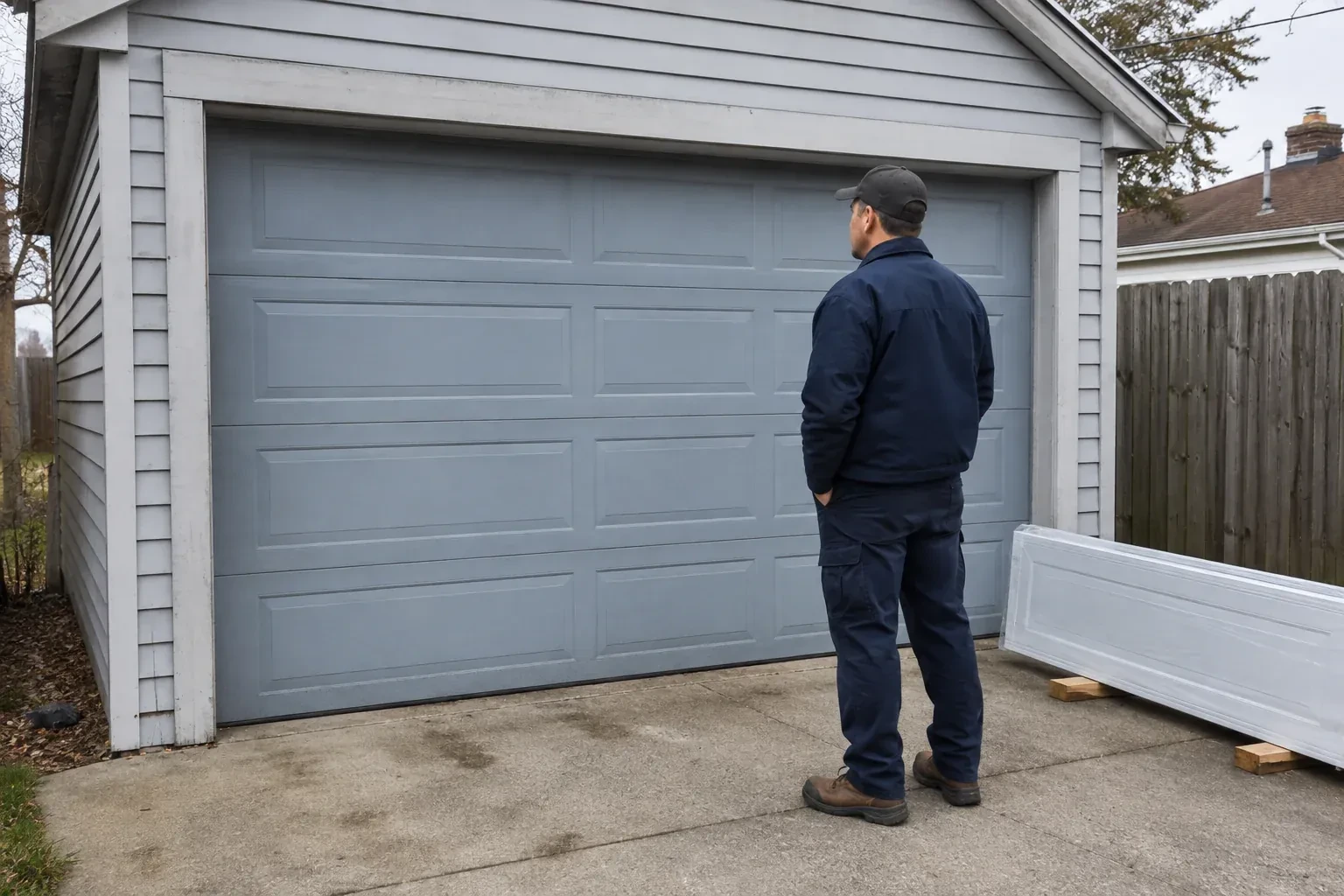
Sound familiar?Dynes
- The call
- The wall control asks the door to close, but the operator hums and stops. The curtain remains overhead while the control light and the photoelectric sensors suggest that the powered system needs a connected diagnosis.
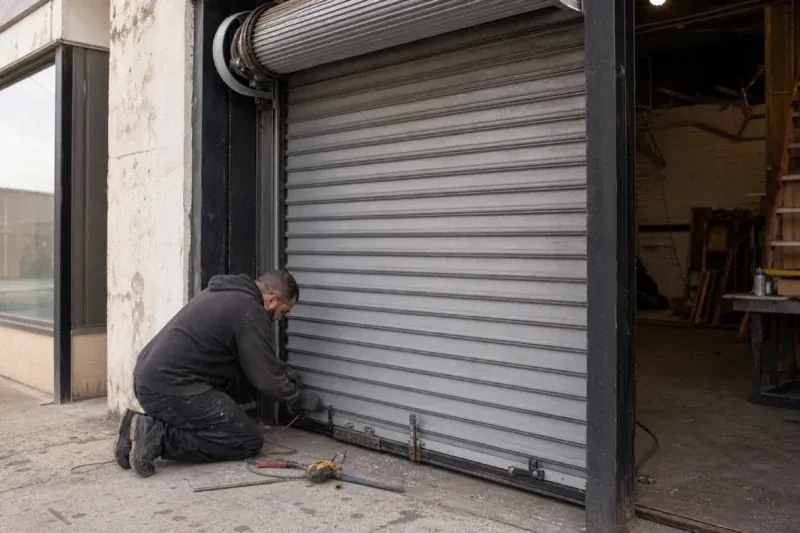
Cold-weather moisture has frozen the bottom seal to the sill, and salty grit has collected along the guide entrances. The door chatters during its first cycle and leaves a visible gap after it reaches the closed limit.
Powered rolling doors add controls and protective devices to the mechanical assembly. A closing complaint may begin at the control station, interlock, sensing edge or photoelectric sensor rather than inside the operator. The visit checks the curtain's free movement first, then follows control response, brake action, limit settings, manual disconnect or hoist and external protection suited to that system. Compatible repairs are completed with the operating instructions in hand. Testing covers normal commands, stopping points, manual operation and protective-device response so staff understand how the restored door is intended to behave.
Sound familiar?Dynes
Commercial Rolling Door Repair · Dynes
Scene 1
For a motor-operated door, the assessment moves from command to motion in a defined sequence. The control station, key switch or access input is observed; lock and pass-door interlocks are checked where present; then the operator brake, drive, limits and manual hoist or disconnect are reviewed. Photoelectric sensors and sensing edges are identified by function rather than assumed to be interchangeable. Their mounting, wiring condition, alignment and response are checked against the operator information. This approach shows whether a stopping complaint comes from protective logic, a control fault, limit setting or resistance in the door itself.
Scene 2
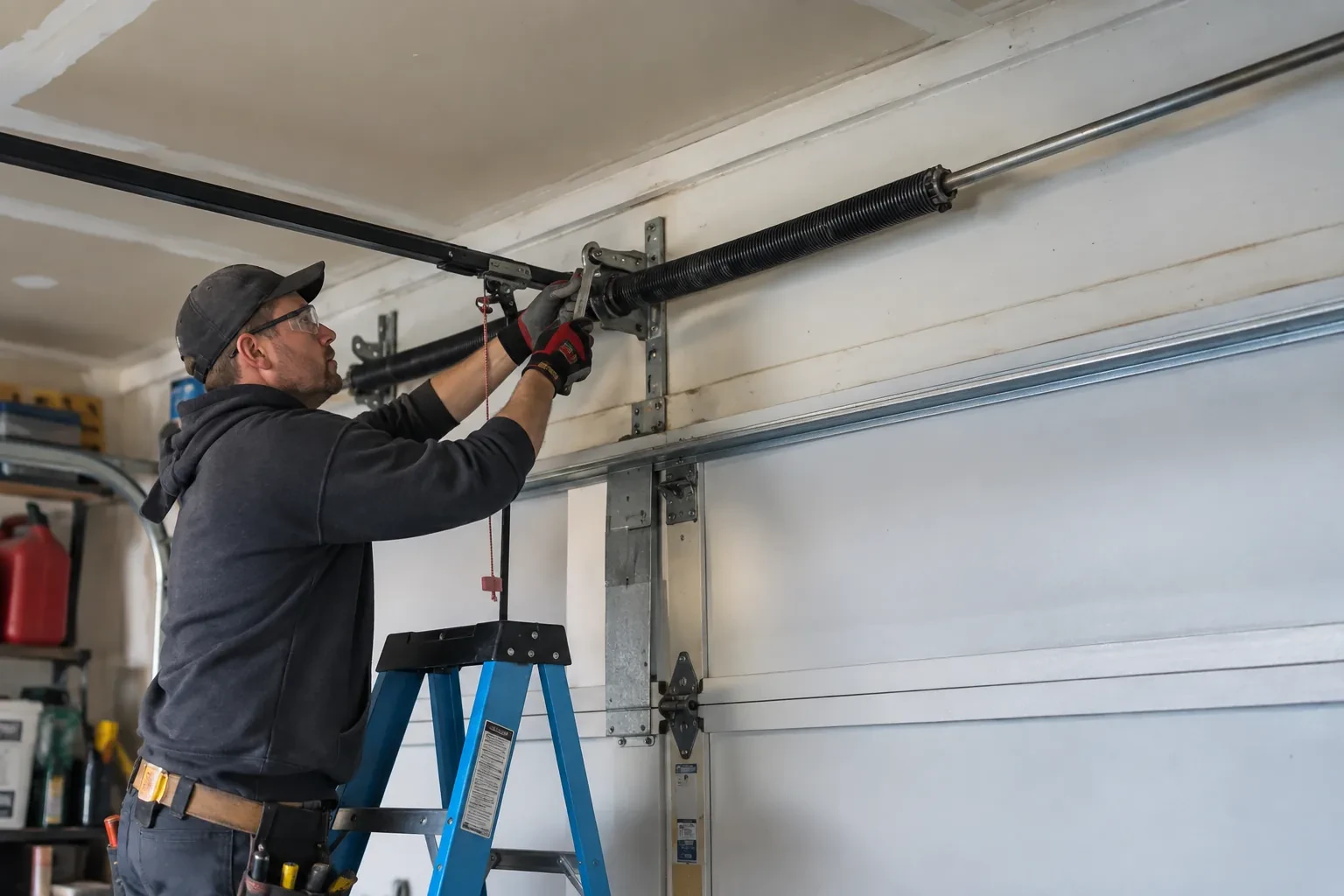
Barrel work is performed with the curtain secured because the internal or connected springs hold substantial tension. Bearings, brackets, shafts, tension wheels and fastening points are addressed first so the assembly has stable support. Spring adjustment follows the identified door procedure using proper winding bars and controlled increments, with operating effort checked between changes. The aim is balanced travel across the full opening, not a setting that merely feels light at one position. Drive sprockets, keys and roller chain are aligned and secured as part of the same mechanical path before power is returned.
Scene 3
A repaired impact area offers useful evidence for prevention. The technician can show where the vehicle contacted the guide, bottom bar or curtain and which travel lane placed it there. Facility managers can respond with visible floor markings, adjusted staging, guide guards or a revised stopping point where those choices suit the site. Operators should report even a light strike because a guide can move before damage looks dramatic. Checking bottom-bar level, guide clearance and fasteners after contact turns a small event into a manageable inspection instead of allowing repeated cycles to spread distortion through the curtain.
What shapes the quoteDynes Garage Door Experts
FeesSame any hour
A photoelectric beam may be blocked, a sensing edge may be active, the curtain may meet resistance, or the operator may be responding to a monitored-device or limit condition. The inspection keeps these possibilities separate. Sensor placement, alignment and response are checked alongside free mechanical travel and the operator's documented control logic.
They can serve different purposes. A monitored photoelectric device may be part of the operator's entrapment-protection system, while a higher beam, loop or other accessory may be intended to detect vehicles or support traffic flow. The installed operator information establishes each role, and added vehicle protection does not replace the primary protective device required by that system.
Many interlocking steel curtains allow a damaged group of slats to be removed and renewed with compatible pieces. The technician also checks neighbouring joints, endlocks, guides and the coil because an impact can spread force beyond the visible dent. Curtain material, profile, gauge, finish and fire-rating status all influence whether sectional repair is suitable.
HaltonOntario
Commercial Rolling Door Repair · Burlington, Elizabeth Gardens, Longmoor, Orchard, Port Nelson, Roseland, Strathcona Gardens
Every square is one home in a hundred.
On-site assessment
Cold-weather moisture has frozen the bottom seal to the sill, and salty grit has collected along the guide entrances.
(289) 816-2884, open 24/7.
On-site assessment preferred · (289) 816-2884, open 24/7