Sound familiar?Orchard
- The call
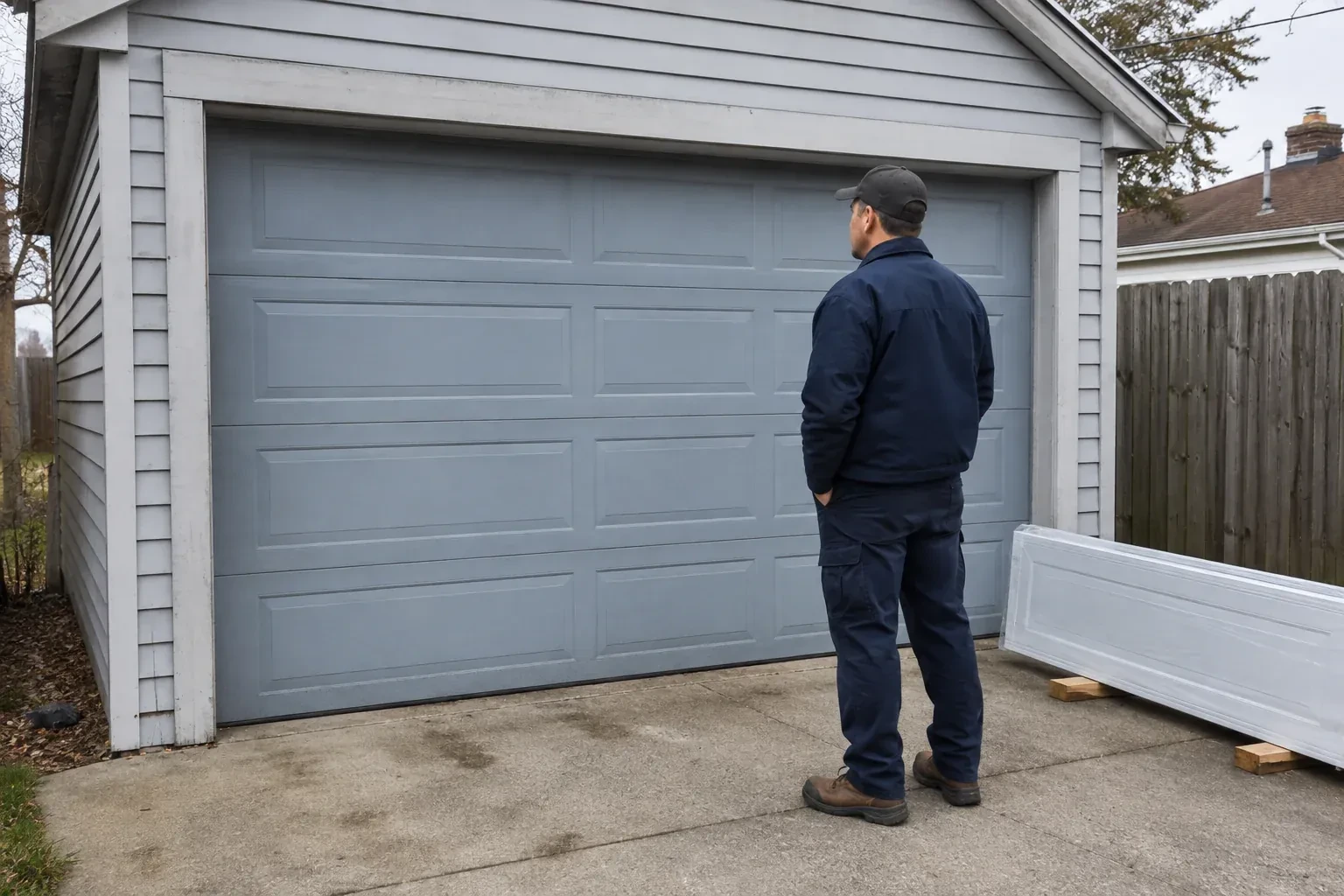
- The hand chain takes far more effort than it did last month. The curtain feels heavy from the first pull, pauses around mid-travel, and settles downward instead of holding a steady position.
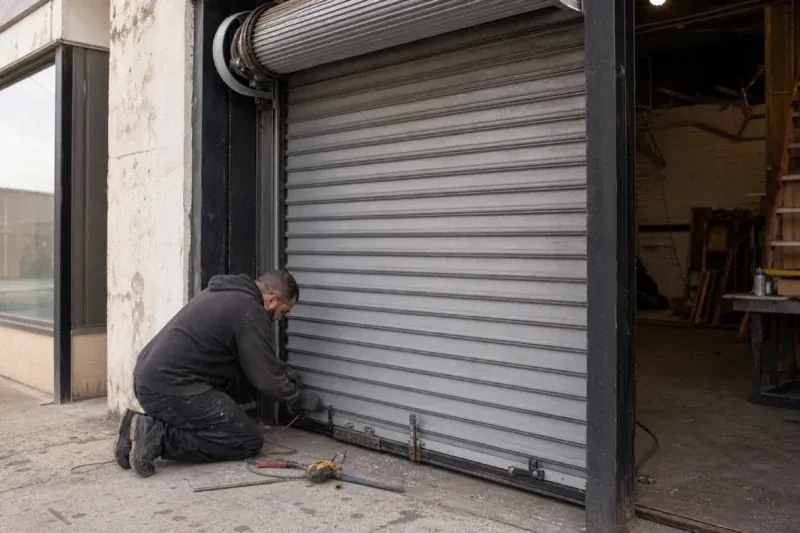
Cold-weather moisture has frozen the bottom seal to the sill, and salty grit has collected along the guide entrances. The door chatters during its first cycle and leaves a visible gap after it reaches the closed limit.
Exterior rolling doors work at the boundary between indoor operations and winter weather. Hardened bottom seals leave daylight, ice holds the bar to the sill, and salt-laden grit can collect where the curtain enters its guides. Service separates weather effects from alignment or balance faults, cleans the travel path and renews damaged sealing parts where included. The curtain is then checked for even contact at the floor and smooth entry into the coil. Care guidance focuses on keeping drains, guides, sensor faces and the threshold clear while using only the lubricant named for the door.
Sound familiar?Orchard
Commercial Rolling Door Repair · Orchard
Scene 1
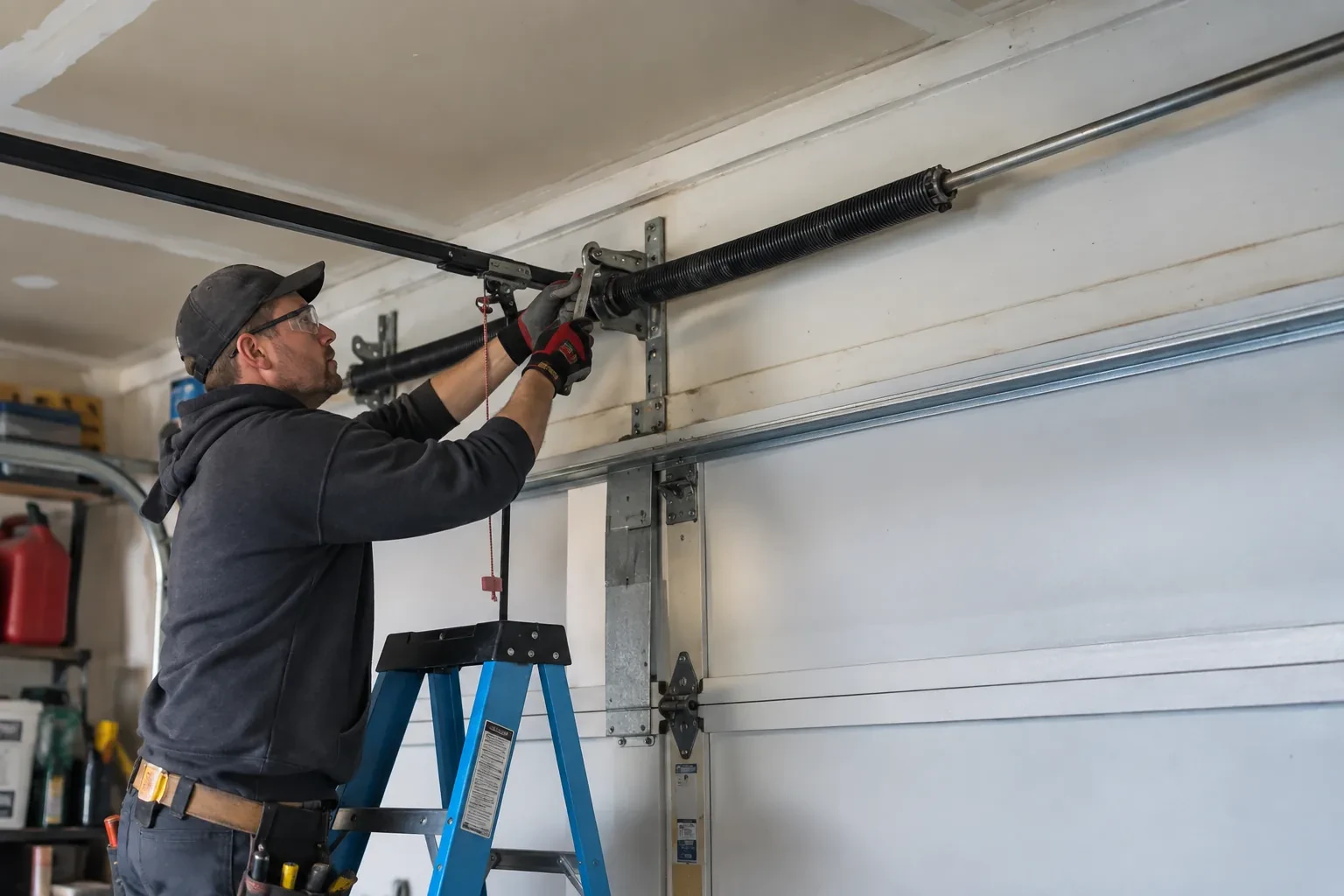
Door, operator and component labels anchor the scope to a known assembly. Model information helps establish suitable slats, endlocks, controls and service instructions, while a fire-protection label changes how substitutions and testing are handled. The technician also notes whether an electrician, structural professional, fire-safety contact or access-control provider owns a connected task. Those boundaries are recorded before work is quoted. Clear identification prevents an ordinary rolling-service repair from absorbing alterations to a fire separation, power supply, building frame or security system without the information and authorisation those areas require.
Scene 2
Bent or shifted guides are corrected from measured reference points rather than by forcing the curtain through them. The technician establishes the required gap, plumb and parallel relationship, then straightens or replaces authorised guide components and restores loose wall-angle or bracket fasteners. Bellmouths are shaped to receive the curtain cleanly, and guide stops are secured. If damaged masonry, steel framing or a moved jamb prevents reliable attachment, that condition is separated for the appropriate building work. Once the supports are sound, the curtain is centred and moved gradually to confirm even clearance on both sides.
Scene 3
After repair, staff have a door that follows a repeatable path from sill to hood. The bottom bar rises level, slats enter both guides without a recurring scrape, and the curtain forms an orderly coil rather than wandering toward one bracket. Open and closed limits match the usable doorway, and the normal control produces the expected start, stop and direction. The technician demonstrates a complete cycle and points out the ordinary sounds of the assembly so a future change is easier to recognise. This clear operating baseline is often the most useful outcome for a busy facility.
What shapes the quoteDynes Garage Door Experts
FeesSame any hour
A photoelectric beam may be blocked, a sensing edge may be active, the curtain may meet resistance, or the operator may be responding to a monitored-device or limit condition. The inspection keeps these possibilities separate. Sensor placement, alignment and response are checked alongside free mechanical travel and the operator's documented control logic.
They can serve different purposes. A monitored photoelectric device may be part of the operator's entrapment-protection system, while a higher beam, loop or other accessory may be intended to detect vehicles or support traffic flow. The installed operator information establishes each role, and added vehicle protection does not replace the primary protective device required by that system.
Many interlocking steel curtains allow a damaged group of slats to be removed and renewed with compatible pieces. The technician also checks neighbouring joints, endlocks, guides and the coil because an impact can spread force beyond the visible dent. Curtain material, profile, gauge, finish and fire-rating status all influence whether sectional repair is suitable.
HaltonOntario
Commercial Rolling Door Repair · Burlington, Dynes, Elizabeth Gardens, Longmoor, Port Nelson, Roseland, Strathcona Gardens
Every square is one home in a hundred.
On-site assessment
Cold-weather moisture has frozen the bottom seal to the sill, and salty grit has collected along the guide entrances.
(289) 816-2884, open 24/7.
On-site assessment preferred · (289) 816-2884, open 24/7