Skip to content
DynesGarage Door ExpertsOpen 24/7 (289) 816-2884
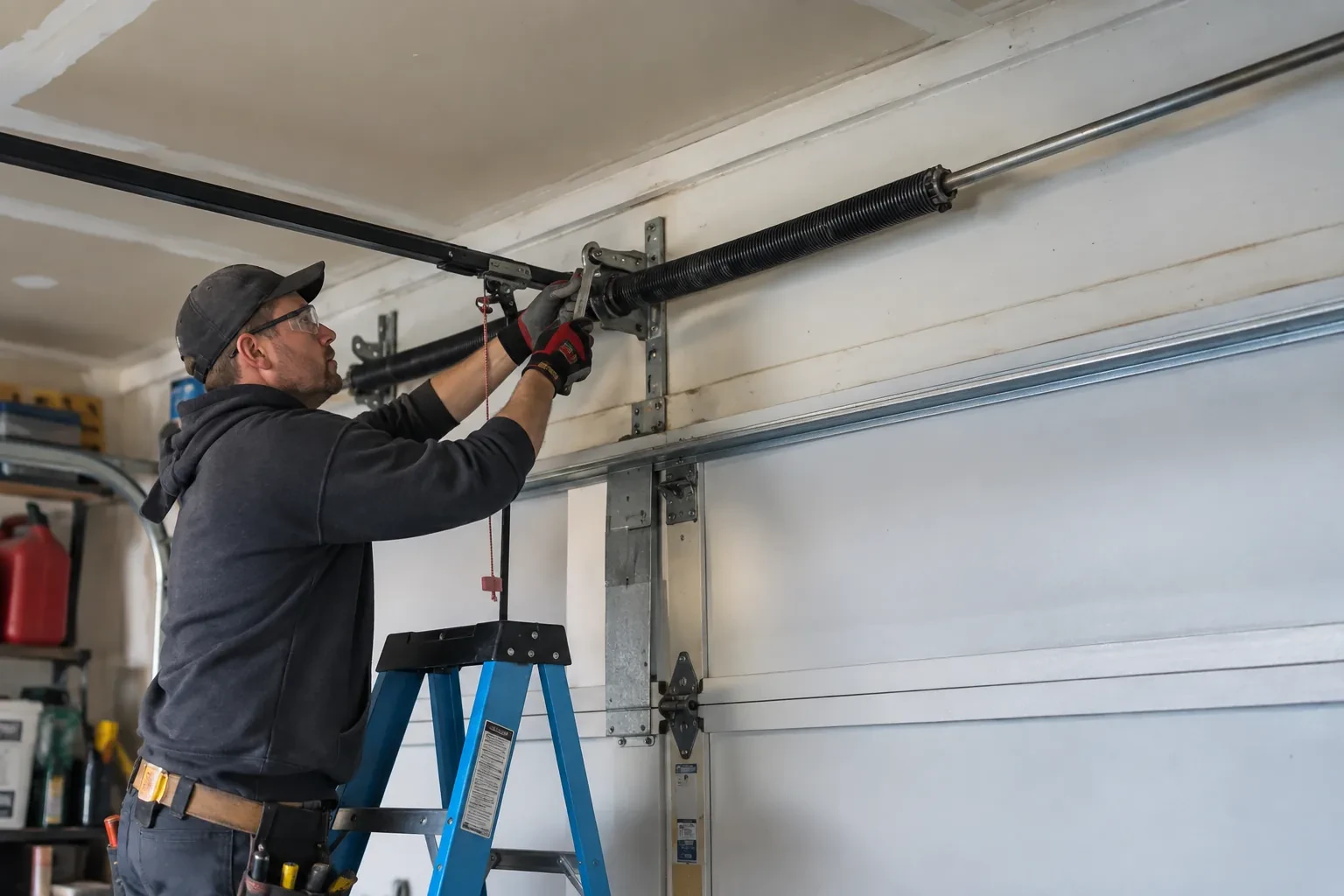
Technician on a blue ladder holding a wrench at a coiled torsion spring above a white garage door. — Burlington

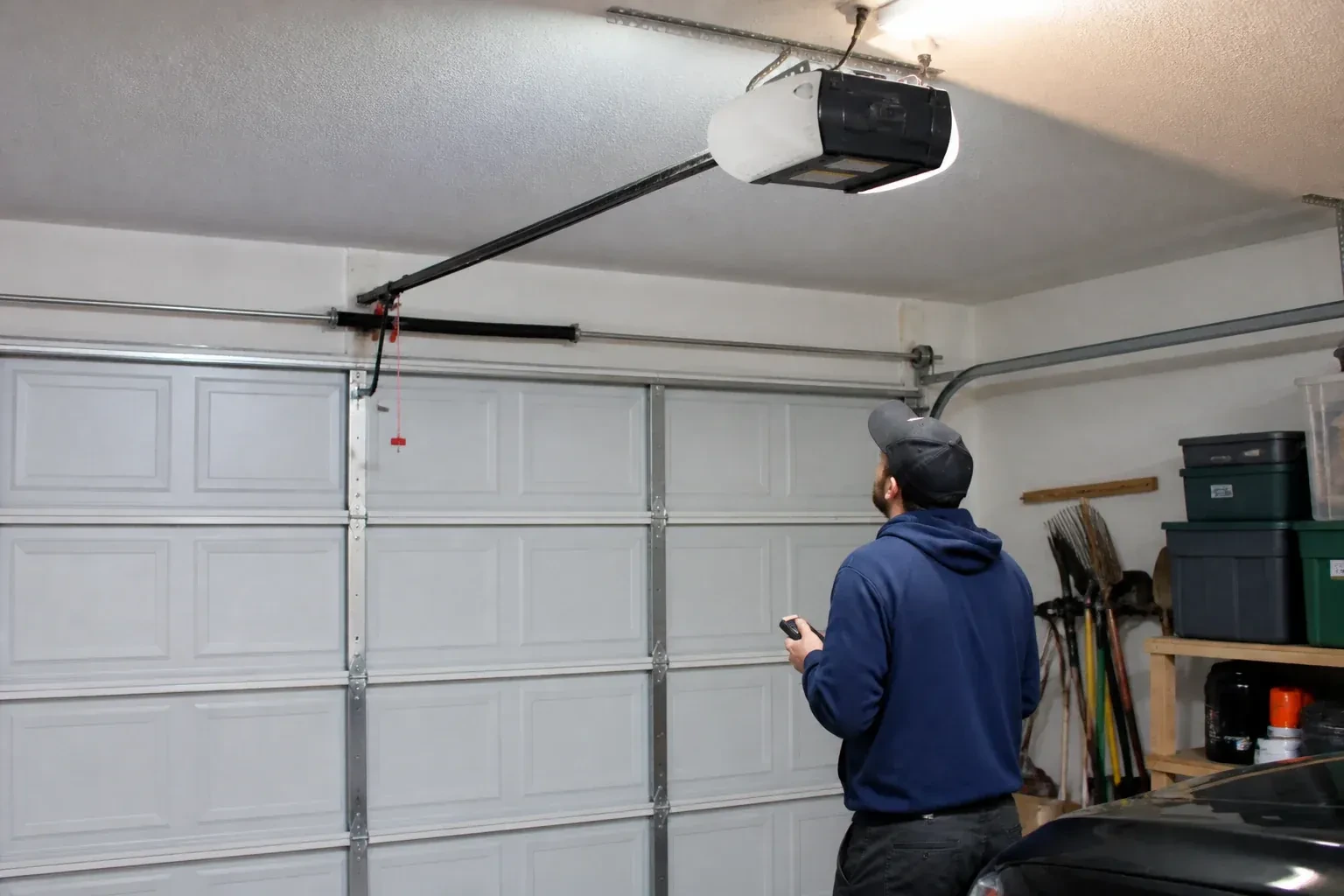
Openers · Burlington

Emergency Release Repair

Your garage is detached and has no side door. The remote is dead, the keypad is dead, and the small round lock in the top panel is meant to be your way in.

In plain words

The release only earns its keep on a door that behaves once it is free of the opener, so the visit starts with the door closed and a balance test rather than with the handle. Disconnected, a healthy door lifts with modest effort, holds around a metre off the floor and stays put at the top. That is the door the release is designed for. If the door is heavy, drifts down or shoots up, the springs need attention first, work done with winding bars by a technician trained for tensioned hardware. Once the door passes, the release work goes ahead and the system is proven together.

Sound familiar?Burlington

The call
Your garage is detached and has no side door. The remote is dead, the keypad is dead, and the small round lock in the top panel is meant to be your way in. The key goes in and turns, but nothing on the other side lets go.
NextHow the visit goes

Emergency Release Repair · Burlington

How the visit goes

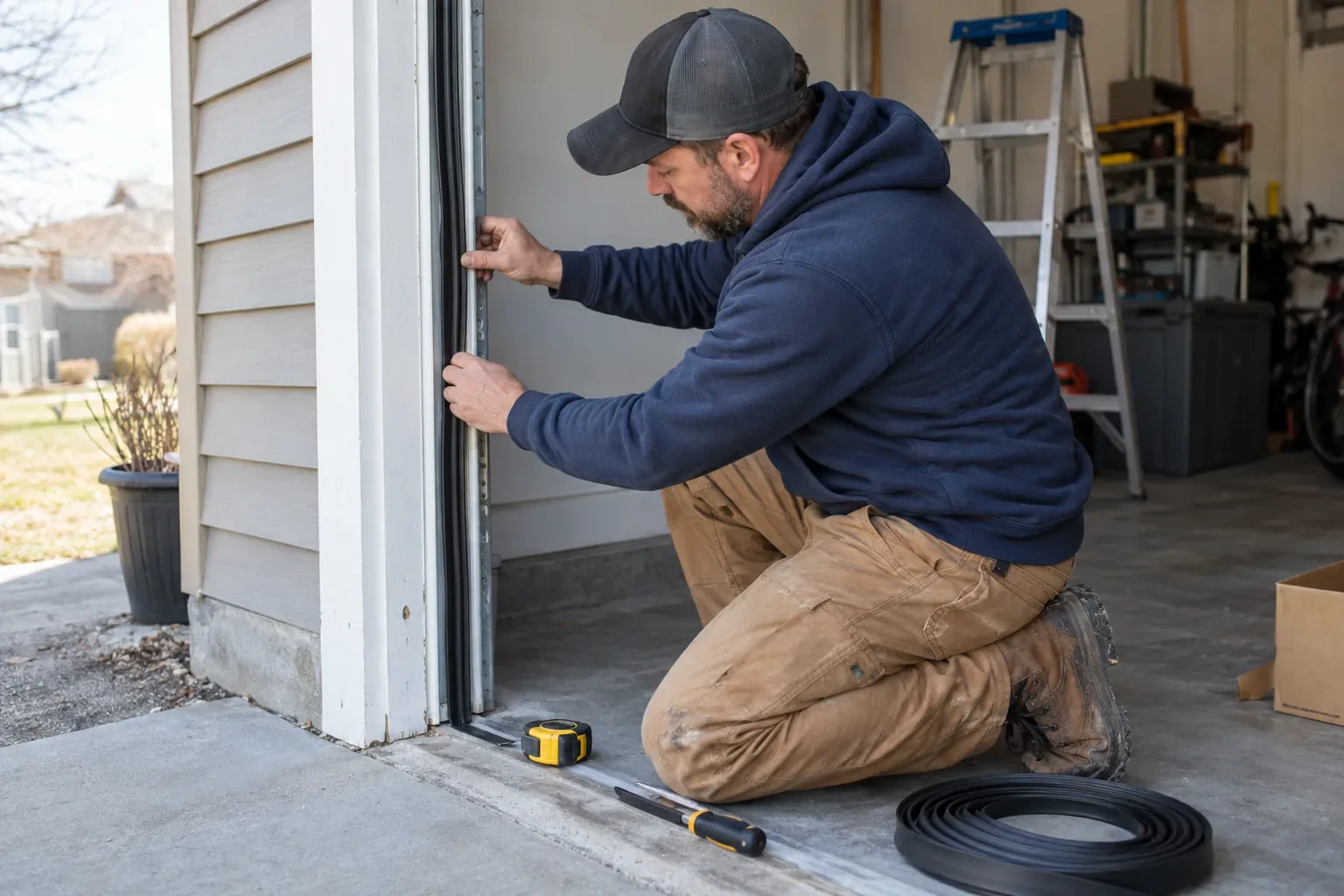
Technician kneeling beside white house siding, pressing a black rubber seal strip along a garage door side track. — Burlington
  1. Scene 1

    The outside key release, if there is one

    Many detached garages and some attached ones have a small keyed cylinder, set in the top section on a sectional door or at mid-height on others. The technician checks whether one is fitted, whether the key is available, and whether the cylinder turns and pulls out as designed. Behind it, a cable runs to the trolley lever; it is traced for kinks, stretch, a detached end or a route that snags on a section joint as the door bends. In winter the cylinder is checked for salt crust and ice. Where the garage has no other door, this release is the way in when the opener is silent, so its condition is treated as part of the same job.

  2. Scene 2

    Door work first when the balance test fails

    When the disconnected door proves heavy, drifts or binds, the technician changes the order of the visit. The opener stays disconnected, and the door side is put right first: springs re-tensioned or replaced with winding bars by a technician trained for tensioned hardware, frayed cables replaced, dry rollers and hinges lubricated, a bent track straightened. Only when the door lifts and holds by hand is the release work finished and the trolley reconnected. This keeps the release honest: it is meant to hand you a door you can move, and it can only do that once the springs are carrying the weight.

  3. Scene 3

    Manual use for more than a day

    If an outage runs long, you know how to keep the door in manual mode without the trolley catching the door on its own. On rails where the cord is pulled down and then back toward the opener, the lever stays held out until you return it; on others the trolley simply stays free until the opener is run. Either way, the door is lifted and lowered by hand and a manual lock or slide bolt on the door keeps it shut overnight. When power returns, reconnect before pressing any button, so the opener never runs with the door lock engaged.

In the van

  • 2x4 offcut for the reversal test
  • Rope and red handle kit
  • Door arm, clevis pins and clips
  • Release lever and spring
  • Chain or belt tension hardware

What shapes the quoteDynes Garage Door Experts

Distance to your door
Every visit includes the drive. A property on the edge of the service area or down a long rural road takes more of the technician's day than one a few streets away, and the quote allows for it.
Ceiling height and access
A standard garage puts the trolley in easy reach from a step ladder. High ceilings, a storage loft, a high-lift track or a car that cannot be moved add setup time.
Number of doors and openers
A double garage with two openers, or a house with a detached garage as well, means two releases to check and possibly two sets of parts, and the quote counts each.

FeesSame any hour

Have it ready

Before you call · 0 / 3

(289) 816-2884

The questions that come up

The motor hums and the trolley is jammed at the end of the rail. What happened?

The trolley has been driven into the stop bolt or stop tab, usually because the travel limit let it run too far. The technician frees it by pulling the release, slackening the chain or belt a few turns, running the motor so the trolley walks off the stop, then correcting the travel limit and re-tensioning the drive. The reversal tests are repeated afterwards, since the limits were changed.

What should I tell you when I call?

What the release did: handle missing, cord snapped, trolley will not reconnect, door let go on its own. Where the door was at the time and where it is now. Whether the opener is a chain, belt or screw unit on a rail, or a wall-mounted one beside the door. Whether there is an outside key release and whether you have its key. And whether the garage has a side door or a door into the house. That shapes what comes on the truck.

Would battery backup mean I never need the release?

It covers most outages: the battery opens and closes the door on stored power, so the release stays on its hook. It is a wearing part that needs replacing every few years, and a status light or beep tells you when. The release is still the fallback for a flat battery or an opener that has itself failed, which is why the two are checked together. Many households on outage-prone streets keep both in working order.

Burlingtoninformation

HaltonOntario

Town
Burlington, Halton
In business
19 years
Hours
Open 24/7
Nights, weekends and holidays, same fees
Visits
On-site assessment preferred. Request a visit or call.

2021 census: what it means at the door

Every square is one home in a hundred.

  • 47 in 100 homes · mixed ages
  • About 47% of homes in Burlington were built in 1980 or earlier, according to the 2021 Census.A mixed-age neighbourhood is where retrofits are most common: safety cables added to extension springs, a torsion conversion on an older door, insulated panels replacing a hollow door, or a quieter belt opener under a newly finished room above the garage. Each is a routine job for us.
  • Single-detached houses make up about 50% of homes in Burlington (2021 Census).Where houses and attached homes sit together, the shared garage door on a small condo building may be a commercial operator on a heavy door, while the house next door runs a light residential unit. We service both types and carry parts for each.

Source: Statistics Canada, Census Profile

Open Burlington in Google Maps

On-site assessment

Request a visit.

Your garage is detached and has no side door.

(289) 816-2884, open 24/7.